After the second term started our first assignment was to make a music video on a motivational song.
I had done this with 3 other class mates as it was a group project. They were Alishba Faheem, Anushay Faisal and Raahim Masood Khan.
The song we chose was Unstoppable by Dino James. It is a Hindi Rap song that brought through the message that people should accept who they are and be proud of it.
The project was done during class hours. All phases of production were covered in the one hour that was given to us. Enjoy!
Once we had learnt about Camera shots, angles and movements our teacher taught us about editing. His first sentence was, and I quote “Editing can make or break a production.” It is the part of the moving image process where the meaning or intention of the director is realized.
Editing is the process of taking the raw footage and arranging it to create meaning so that it is clear and creates the desired effect. Editors decide what to keep and what to remove from the raw footage , in what order the footage is to be seen and how it will be joined together through a variety of techniques to make sense to the viewer.And therefore in my opinion editing is a very essential part of the whole process.
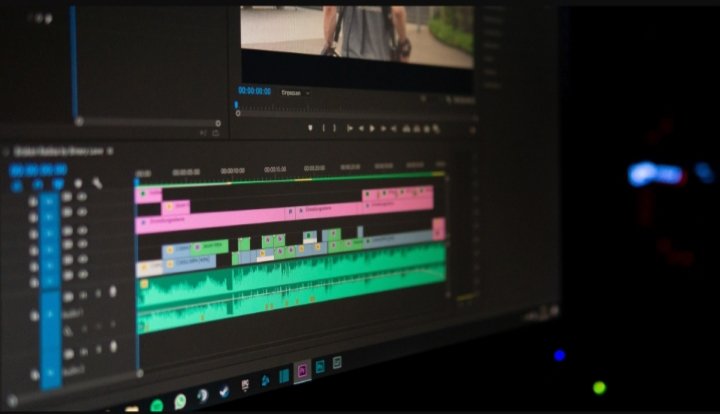
The application that I use for editing is Adobe Premiere Pro.
(here is a sneak peek of me editing a clip from The Dog Tale)
Types of editing
Cut: A transition where one shot is instantly followed by another.
Continuity Editing: Visual editing where shots are cut together in a clear and linear flow of uninterrupted action. This type of cutting seeks to maintain a continuous sense of time and space.
ContinuityError: When the action or elements of a scene don’t match across shots. For example, when a character breaks a glass window but in a later shot the window is shown undamaged.
Cross Cutting: Technique used to give the illusion that two story lines of action are happening at the same time by rapidly cutting back and forth between them.
Cutaway: The interruption of a continuously filmed action with a shot that’s peripherally related to the principal action.
Dissolve: When the end of one shot overlaps the start of the next one to create a gradual scene transition.
After learning about the ways that the camera positionings and other ways of understanding a media text, we were taught how to analyse media texts. Textual analysis is the method communication researchers use to describe and interpret the characteristics of a recorded or visual message and was taught to us by our teacher through out the term.
The main purpose of textual analysis is to describe the content, structure, and functions of the messages in texts. While analyzing we must keep in mind the types of texts that need to be studied, using the appropriate texts, and deciding which approach to use while analyzing them.
Below you will see example analyses of opening sequences, that I have attempted to do for my favorite movies in the thriller genre.
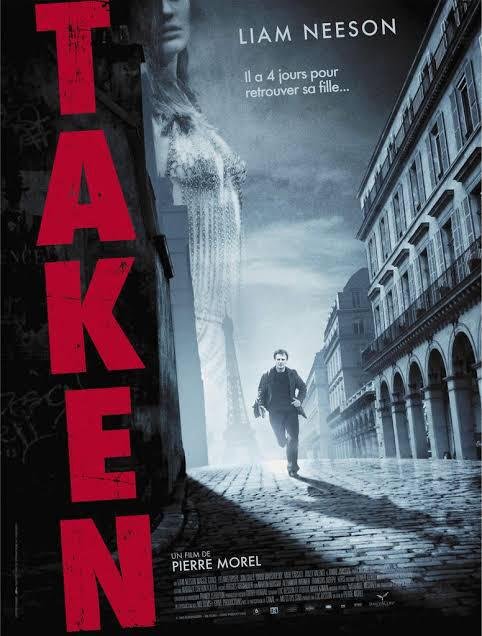
TAKEN
Initially we see a birthday of a young 5 year old girl with her mum unwrapping presents; we can tell it is in the past due to the filming appearing to be done by an home video camera with the picture quality being low. It then cuts to a man sitting down in a dark room opening his eyes, giving us the impression he just had a flash back about something that is bothering him. It shows a form of mental instability n the character and a longing for the past and better days.
After showing the man having a flash back the camera zooms on an image of a young girl with her family at this point the title of the film appears informing the audience the film is about to commence. It also gives us a hint at what the film is about, a family being torn apart.The sound during the opening is diegetic, it adds authenticity but also implies that this home video is important for the audience to watch and listen as it has significance towards the film. However the opening in Taken is more subtle and shows emotion, which is important as it drives the plot of the film.
The opening is definitely a positive as it shows the world at its very best for the main character who seems to constantly be fighting to get back to a complete family. This happy joyful beginning contrasts with the emotions during the film but cleverly links in with the ending of the film which shows a happy and more together family. In many ways this makes the film conform to the thriller conventions as it starts with a happy family and ends with a happy family.
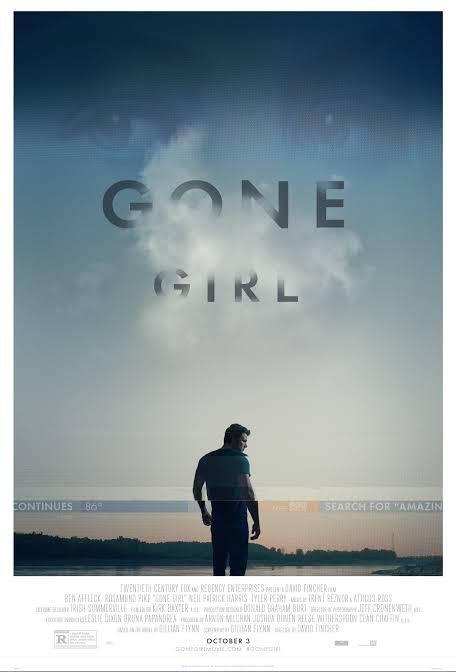
GONE GIRL
The woman depicted is shown to have her head rested up in her husband’s chest. Her perfect blond and beautiful feathers give an idea of her innocence and purity. However when she looks up, her facial expressions show that shes worried or scared, as if shes clenching the muscle in her neck. this creates an illusion that she is a victim. The viewers have not been shown the face of the man but they can assume that he is a violent person through the way he is speaking. The way he strokes his wife’s hair shows as if he has tamed her and has total control over her.. This creates an impression that he is probably psychotic or a criminal in some way.
Time is a key theme that is presented throughout this opening scene.It is dawn when the title of the film comes up, where the background slowly gets brighter as morning awakens. Then there is a mass of different shots, each creates an illusion that people are waking up but when the shot goes to Nick he is already awake and seems to have been on a run. This can be interpreted as he is the only one awake , symbolizing his unhappiness and needs to escape.Time is apparent as the opening sequence begins to close and “the morning of” appears on the screen. This shows how something terrible is going to happen, and time will be necessary for this man’s future.
The costume of Nick Dunne wear is very monotone and simple, this may reflect on his personality. His plain and somewhat dark expression matches his costume to reveal somewhat sinister qualities within him. He is also shown to be running, this may imply that he is running away from his life but ends up going in circles.
The sound track used is high pitched to create suspense that initiates tension in the upcoming series of events. The sound track used is very effective as it is not so cliche, its wiry and high notes show a slow burning movie that is mirrored in the film.A non-diegetic sound of the narrators commentary is used, his paced and neutral tone matched with his violent words to create tension and initiate that he might have killed his wife.The digetic sounds of birds chirping and water hitting the shore were probably added to normalize the situation.
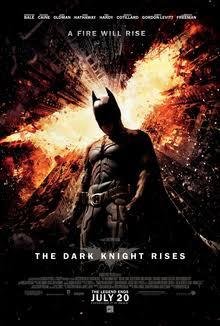
THE DARK KNIGHT RISES
The opening sequence seems to come from the point of view of the antagonist, or that of somebody trying to piece together the events that led to the fall of Batman. This premise is similar to that of Sky fall with the fundamental difference that we never see Batman himself. Both of which however do seem to be illustrating some kind of revenge plot against our hero. The main theme that stands out is the constant ice. We see the ‘Bat Sign’ in the middle of a block of ice that gets chipped at throughout the sequence, until eventually the sign is broken itself, eluding to the idea that Batman will be chipped away at until he breaks.
We see photos of Batman, Commissioner Gordon and Cat woman, all being placed into water, as if we are in the dark room of a photo lab, making us believe that a plan is unfolding before our eyes and creating intrigue as to what will unfold. Blue prints of Buildings and Newspaper cut outs are also used, giving the audience a chance to piece together the unfolding story line. Eventually we end on the image of Batman’s mask, shattered against a snowy landscape, signifying that the end is nigh for Bruce Wayne.
The soundtrack for the whole film is made in this way, giving it a bespoke and original feel. The track begins energetically, with a visceral, tribal beat, projecting thoughts of war onto the audience. It has a low pitch, creating a dark and Gothic feel, which aids the feeling of suspense and tension for the audience. The epic nature of the track is thrilling and it continues to build until the reveal of Batman’s mask which ends the sequence. The opening sequence itself however, does not give any of this away, other than the one short clip where we see it written behind the ice.
The location of the sequence seems to shift throughout. The most recurring location seems to be in a laboratory of some kind, but there are times when we see photos seemingly being processed, ice melting or being chipped away at, blueprints of buildings and newspaper articles being circled and crossed out. This leads me to believe that either the antagonist is operating in multiple locations, or there is a group of people who want to bring Batman down. The final location is outdoors, where we are left with the disturbing image of Batman’s shattered mask, deserted in the snow.
The main visual theme throughout the sequence is cold. All of the shots seem to have been filmed through a blue filter or specifically graded in this way during post- production. This alongside the mainly black and white images gives an otherworldly or post-apocalyptic feel. The dark colored photographs and old fashioned developing technique reinforce this notion. Towards the end of the sequence we see the antagonist’s hand which is half covered in a black glove. We only see these gloved hands and nothing else, which holds the identity back for longer, additionally giving the impression of secrecy and mystery. Finally, ice is such an important recurring visual theme. The credits are written in it. Ice melts which means that no evidence will be left behind.
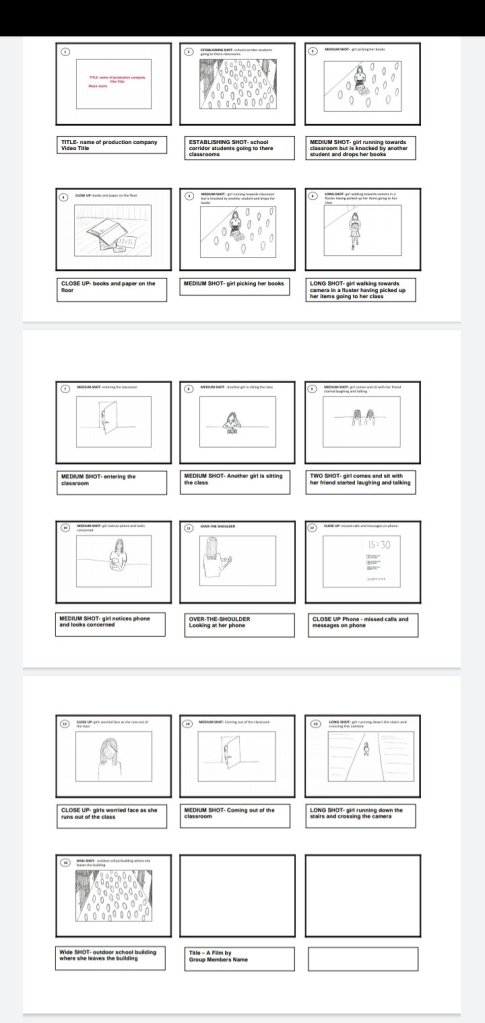
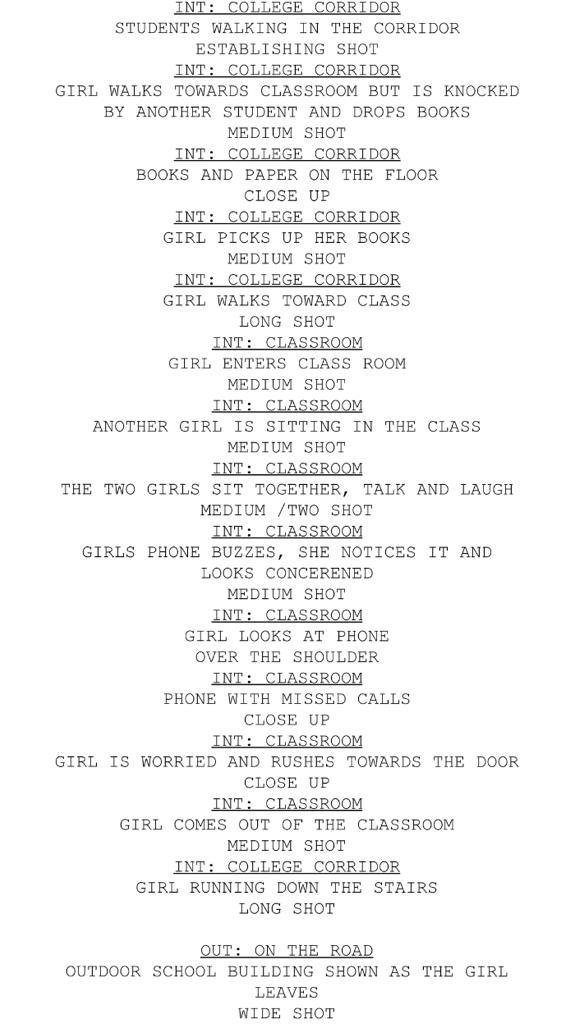
Later in the term our teacher had asked us to make a video, with the help of a story board provided by him. We were also asked to write a script for this video. ( the script and storyboard is posted below with the final product)
This video story labelled, The Dog Tale, was made by me and Miraal Kazmi ( my classmate from media class). With the help of different camera angels, shots and editing we tried to portray the love of a dog. The actor in this video story was Mohammad ( Miraals cousin), and the dog was Bobo (miraals dog). This video story was shot at her house where she took the shots and I did the editing.
Our teacher had then assigned us to do a picture story that gave an insight of our daily life.
Today I had an Model United Nations, practice session at the college. Then during the break, my friend and I had gon to get Biryani. Later my parents had come to pick me up from college, after which I had an orange and watched a movie, The Breakfast Club.
Right in the begining of this term our teacher had taught us about various camera shots, angles and movements. here I will be discussing about them in detail, with a few examples.
CAMERA SHOTS
Extreme Long Shot (aka Extreme Wide Shot) Used to show the subject from a distance, or the area in which the scene is taking place. The character doesn’t necessarily have to be viewable in this shot.
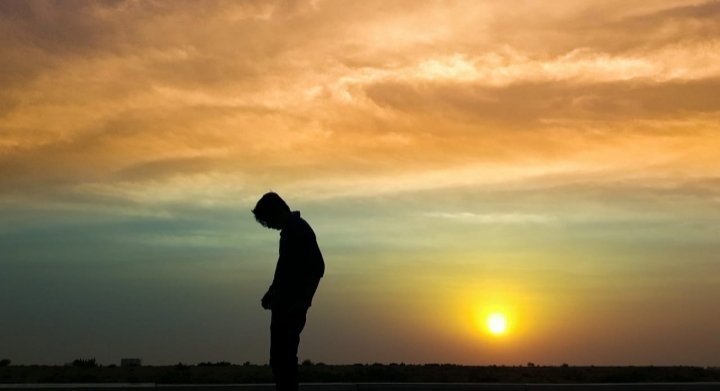
Long Shot (aka Wide Shot) Shows the subject from top to bottom; for a person, this would be head to toes, though not necessarily filling the frame. The character becomes more of a focus.
Full Shot Frames character from head to toes, with the subject roughly filling the frame. The emphasis tends to be more on action and movement rather than a character’s emotional state.
Medium Long Shot (aka 3/4 Shot) Intermediate between Full Shot and Medium Shot. Shows subject from the knees up.
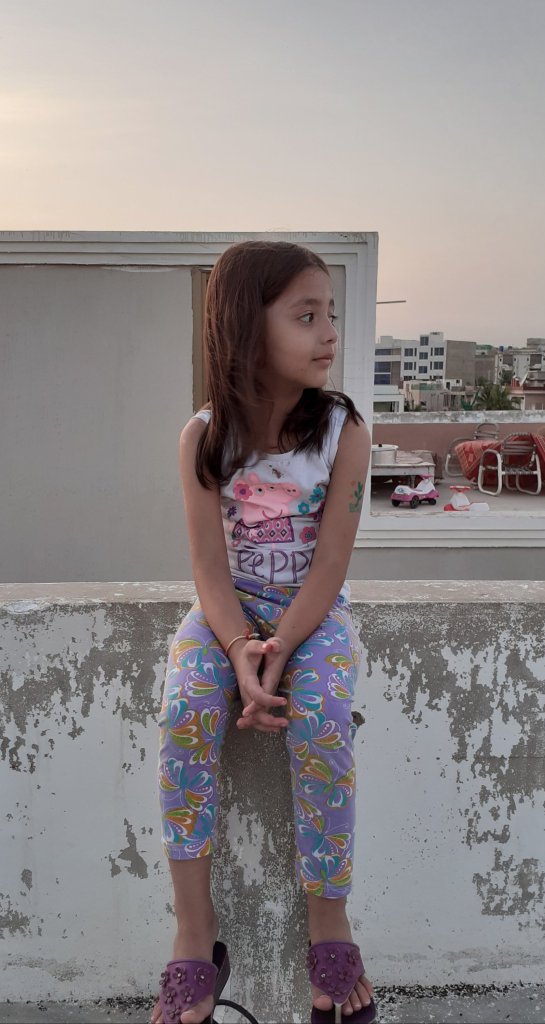
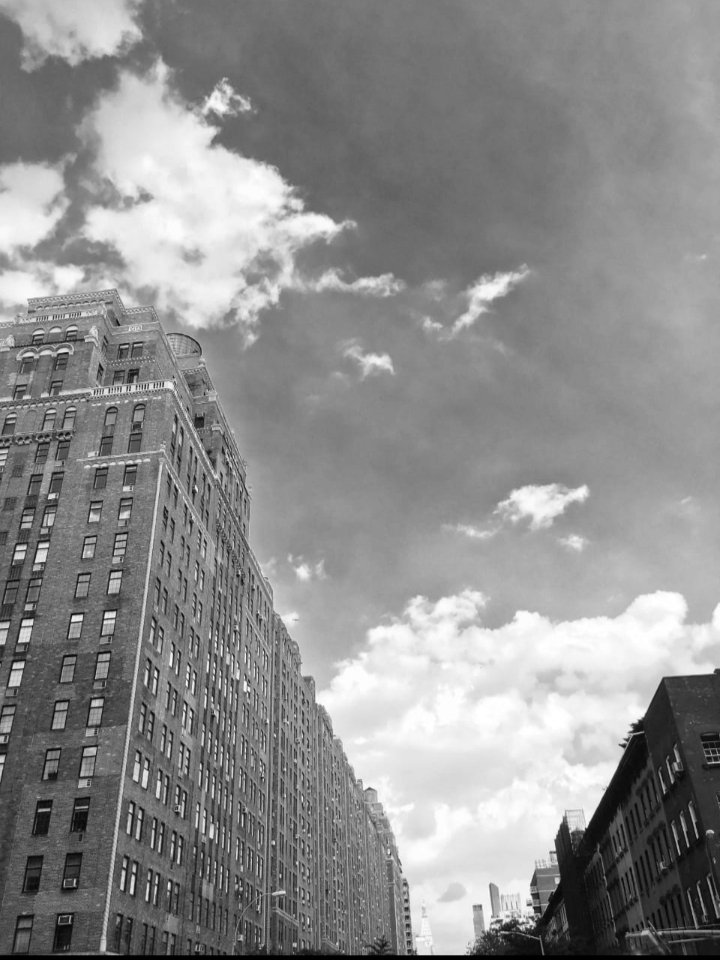
Medium Shot Shows part of the subject in more detail. For a person, a medium shot typically frames them from about waist up. This is one of the most common shots seen in films, as it focuses on a character (or characters) in a scene while still showing some environment.
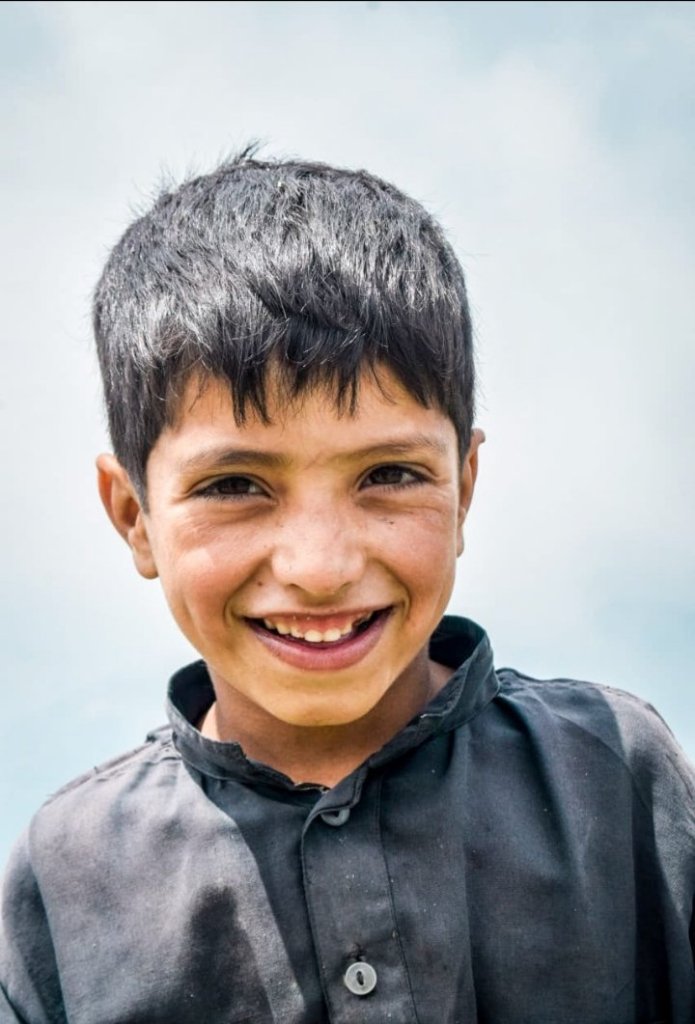
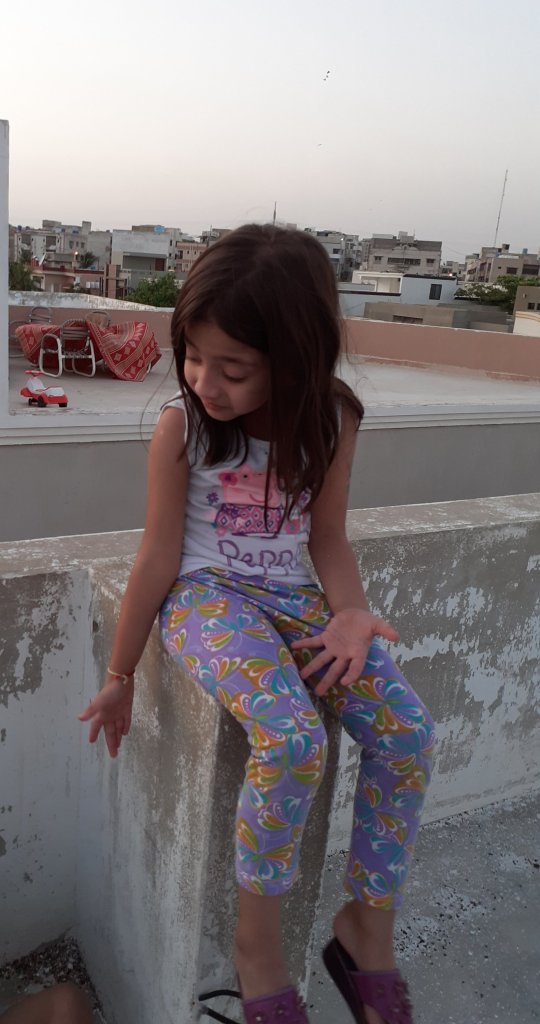
Medium Close-Up Falls between a Medium Shot and a Close-Up, generally framing the subject from chest or shoulder up.
(this image was taken 2 years ago when I had completed my first fund raiser for the children of Rehnuma School)
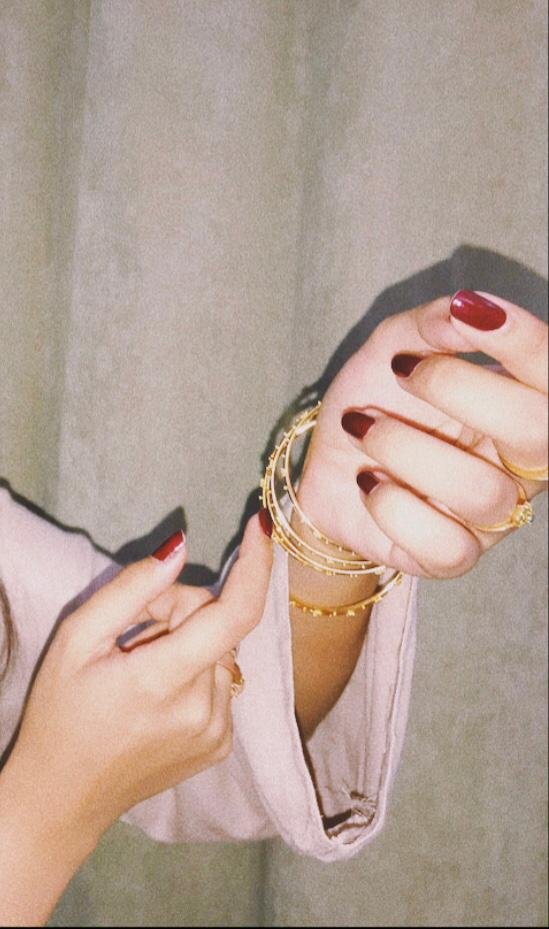
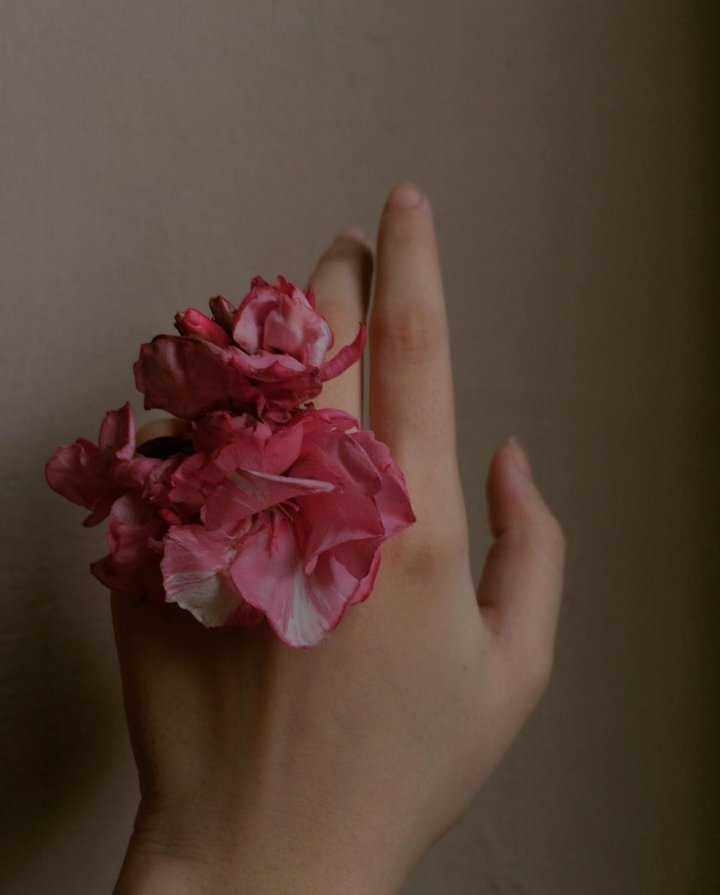
Close-Up Fills the screen with part of the subject, such as a person’s head/face. Framed this tightly, the emotions and reaction of a character dominate the scene.
(a close up of Iqra’s gorgeous hands)
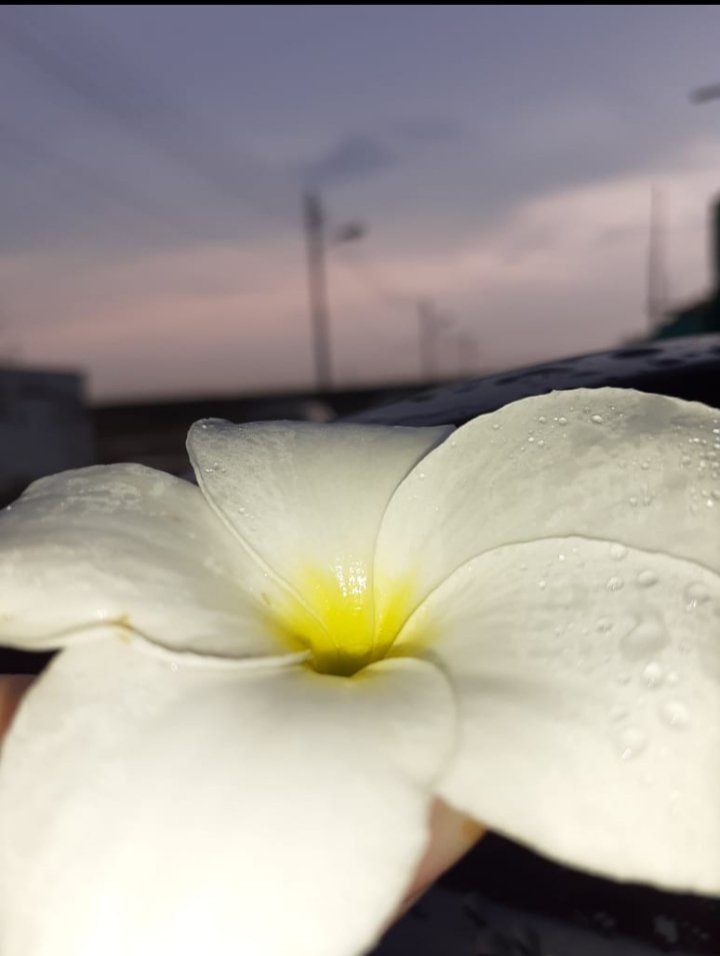
Extreme Close Up Emphasizes a small area or detail of the subject, such as the eyes or mouth
(just another rainy day in Karachi)
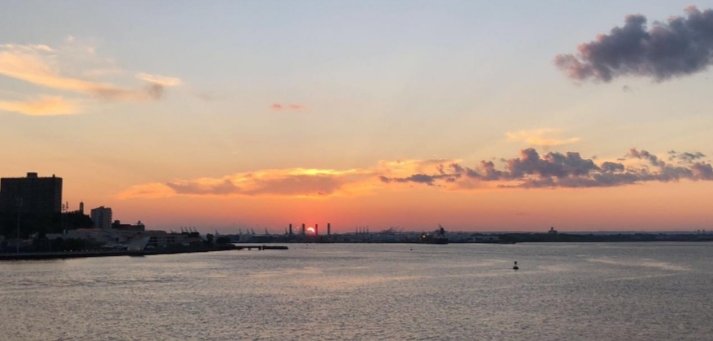
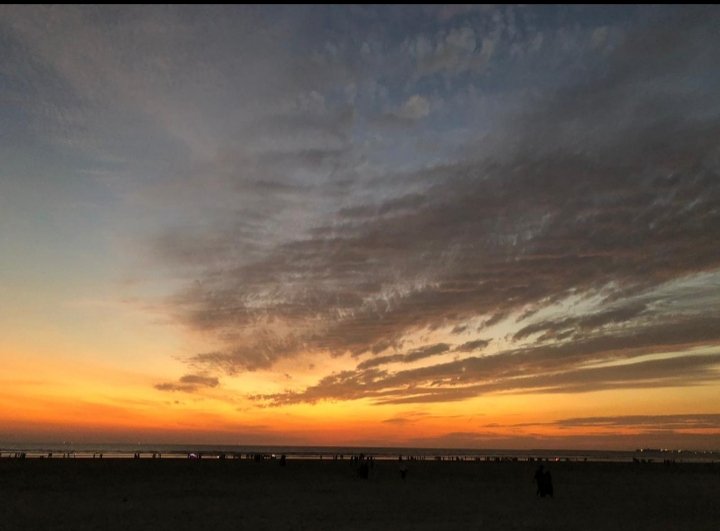
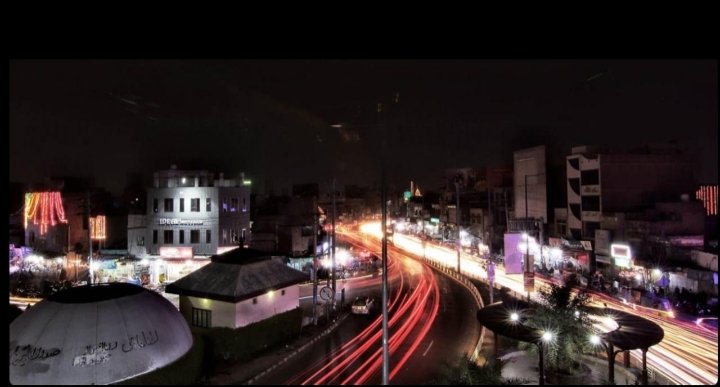
Establishing Shot Usually the first shot of a scene, this is used to establish the location and environment. It can also be used to establish mood and give the audience visual clues regarding the time (night/day, year) and the general situation.
(this was taken last year by me from karachi boat club)
Cutaway A shot of something other than the subject and away from the main scene.
Cut-In Shows a Close-Up shot of something visible in the main scene.
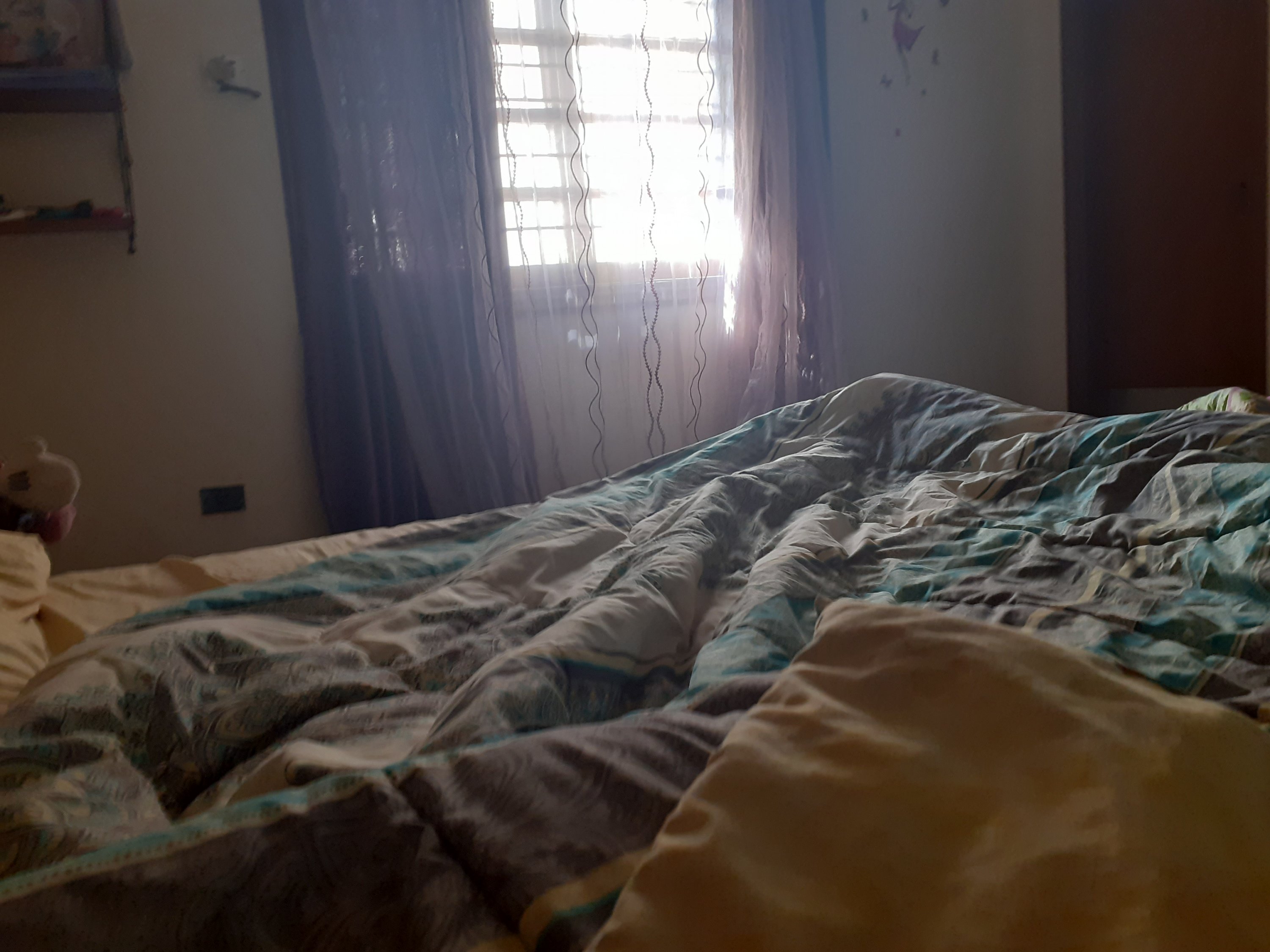
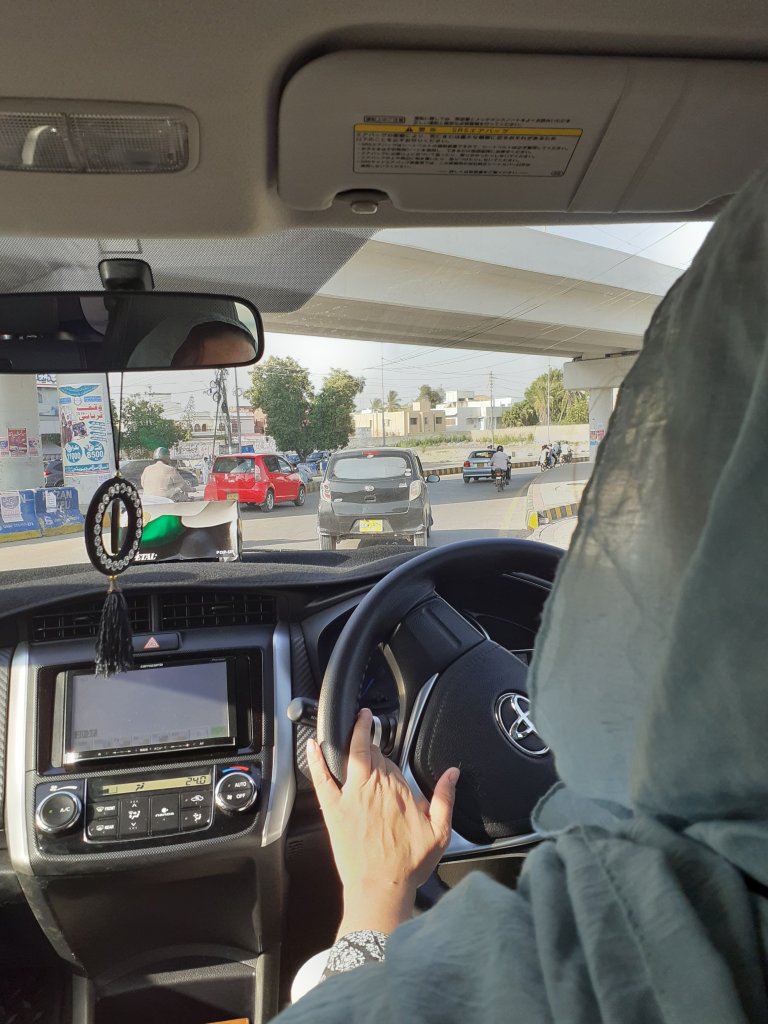
Point of View Shot (POV) Shot intended to mimic what a particular character in a scene is seeing. This puts the audience directly into the head of the character, letting them experience their emotional state. Common examples are of a character waking up, drifting into unconsciousness, or looking through a scope or binoculars.
Reaction Shot Shows a character’s reaction to the shot that has preceded it.
Weather Shot it shows the climate of the background or the location.
Reverse Angle Shot A shot taken from an angle roughly 180 degrees opposite of the previous shot.
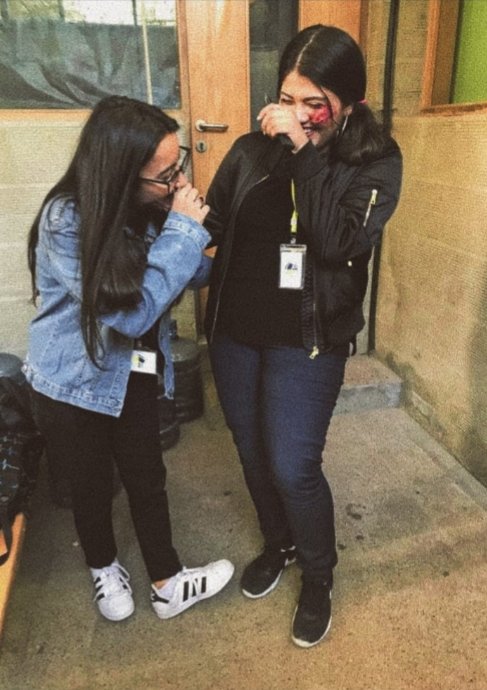
Two Shot A shot in which two subjects appear in the frame.
(yes that’s me and my best friend, Wajiha)
CAMERA ANGLES
Shot types can also indicate where a camera is placed in relation to the subject.
Eye Level Shot taken with the camera approximately at human eye level, resulting in a neutral effect on the audience.
High Angle Subject is photographed from above eye level. This can have the effect of making the subject seem vulnerable, weak, or frightened.
Dutch Angle/Tilt Shot in which the camera is set at an angle on its roll axis so that the horizon line is not level. It is often used to show a disoriented or uneasy psychological state.
Bird’s-Eye View (aka Top Shot) A high-angle shot that’s taken from directly overhead and from a distance. The shot gives the audience a wider view and is useful for showing direction and that the subject is moving, to highlight special relations, or reveal to the audience elements outside the boundaries of the character’s awareness. The shot is often taken from on a crane or helicopter.
Over-the-Shoulder Shot A popular shot where a subject is shot from behind the shoulder of another, framing the subject anywhere from a Medium to Close-Up. The shoulder, neck, and/or back of the head of the subject facing away from the camera remains viewable, making the shot useful for showing reactions during conversations
CAMERA MOVEMENTS
Without a doubt, zooming is the most used (and therefore, most overused) camera movement there is. It is often used as a clutch when the videographer is not sure what else to do to add interest to a shot. If you are going to use zoom, try to use it creatively. Zoom in or out from an unexpected, yet important, object or person in your shot.
Panning is when you move your camera horizontally; either left to right or right to left, while its base is fixated on a certain point. You are not moving the position of the camera itself, just the direction it faces.
Tilting is when you move the camera vertically, up to down or down to up, while its base is fixated to a certain point. It involves the use of a tripod where the camera is stationary but you move the angle it points to. These shots are popular when introducing a character.
A dolly is when you move the entire camera forwards and backwards, typically on some sort of track or motorized vehicle. This type of movement can create beautiful, flowing effects when done correctly.
Trucking is the same as dollying, only you are moving the camera from left to right instead of in and out.
A pedestal is when you move the camera vertically up or down while it is fixated in one location. A pedestal move is easy to do when the camera is fixated to an adjustable tripod.
Ok, rack focus is not as much of a camera move as it is a technique, in it you adjust the lens to start an image blurry and then shift the focus to make it crisper, or vice versa. It is an extremely effective way for you to change your audience’s focus from one subject to another.
Once classes started our first assignment was to watch Birds and analyse it. I thoroughly enjoyed the way Hitchcock brought elements of suspense, horror, drama and thrill into the movie.
The one thing that really caught my attention was how initially the audience believe the film is a comedy as Hitchcock makes us as the viewer get an understanding of the characters back story before unleashing the terror in the rest of the film. The film was very modern for its era and the use of Technicolor added to the horror during the film because it was very new and towards the end the lighting and color created a dark atmosphere. The film also produces an amazingly compelling story line and for those reasons Hitchcock will never be forgotten for his amazing works.
It was one of the most successful suspense films of its time and possibly all time, directed by the Master of Suspense. This made me feel Hitchcock deserved to be called the master of suspense although others may feel this is not one of Hitchcock’s best films because of bad visual effects I think it is worthy of being in the top five of Hitchcock’s films.
 Alizay Imam Rizvi